| Key Facts | Details |
|---|---|
| Target age group | Youth 14–20 in GTA community programs |
| Program format | Group sessions + 1-on-1 mentorship |
| Duration | 6–12 months per cohort |
| Mentor commitment | Minimum 6 months, 2–4 hours/week |
| Geographic focus | Toronto's 31 Neighbourhood Improvement Areas |
| Sports covered | Basketball, soccer, hockey, track and field, cricket |
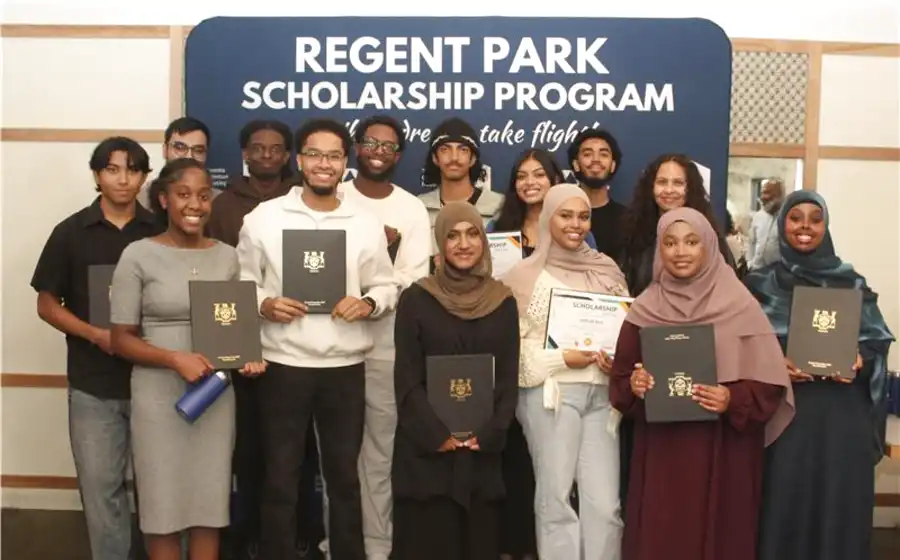
| Scholarship connection | Community sports participation counts toward eligibility |
Sports-based mentorship in Toronto is not about producing athletes. It uses the structure, relationships, and accountability that sport creates to support youth through the transition from secondary school to post-secondary education and early employment.
The Greater Toronto Area is home to over 700,000 young people between the ages of 15 and 29 (Statistics Canada, 2021 Census). Approximately 1 in 5 youth in low-income Toronto neighbourhoods does not complete post-secondary education due to financial constraints. Sports mentorship programs address a specific part of this problem: the absence of consistent adult relationships and structured environments during the years when educational decisions are made.
Why Sports Mentorship Produces Measurable Outcomes
Research from the Canadian Centre for Ethics in Sport and multiple university studies on youth development consistently shows that near-peer mentorship — by people 5 to 15 years older with similar backgrounds — produces stronger outcomes than mentorship by authority figures alone.
Three mechanisms explain this:
- Credibility: A mentor who grew up in Rexdale and navigated the TDSB school system carries different authority than a guidance counsellor who did not. Youth accept guidance from people who have faced the same obstacles.
- Practical knowledge: Athletes who have managed academic eligibility requirements, part-time work, and financial pressure give specific, actionable advice — not general encouragement.
- Sustained engagement: Relationships built on shared experience last longer than those built on institutional assignment. A 6-month mentorship cohort with a near-peer has a lower dropout rate than a school-assigned counselling program.
The sports context adds a fourth mechanism: structured time. Regular practice schedules create routine and reduce unstructured time that correlates with risk behaviours. Youth committed to team practice three times a week have less availability for the situations that derail adolescent development.
How Near-Peer Mentorship Differs from Institutional Support
| Dimension | Near-peer sports mentor | School guidance counsellor |
|---|---|---|
| Background | Similar neighbourhood, similar school system | Typically different socioeconomic background |
| Credibility basis | Shared experience | Professional qualification |
| Advice type | Specific, personal, tested | General, procedural |
| Relationship duration | 6–12 months, structured | Episodic, demand-driven |
| Availability | Scheduled sessions + informal contact | Appointment-based |
| Knowledge of local resources | High — OSAP, ConnexOntario, CAMH youth services | Variable |
This is not a criticism of school guidance counsellors — they serve a different function. Near-peer mentorship fills a gap that institutional support cannot cover, particularly for youth in Toronto's Neighbourhood Improvement Areas who have had negative experiences with mainstream institutions.
Toronto's Youth Sports Landscape — Who Participates and Where
Toronto has hundreds of amateur sports leagues across multiple disciplines. The city's demographic diversity is reflected in which sports are most active in which communities.
| Sport | Key communities | Typical age range | Organized through |
|---|---|---|---|
| Basketball | Jane-Finch, Malvern, Rexdale, Regent Park | 12–24 | Community centres, TDSB schools |
| Soccer | Flemingdon Park, Thorncliffe Park, Scarborough | 10–22 | City of Toronto leagues, school boards |
| Hockey | North York, Etobicoke, Scarborough | 8–20 | GTHL, community arenas |
| Track and field | Citywide, strong in Scarborough | 13–22 | Athletics Ontario, school programs |
| Cricket | Brampton, Scarborough, Mississauga | 14–30 | Ontario Cricket Association |
| Volleyball | Citywide | 13–22 | School boards, community centres |
Participation in any of these sports at the community level — not competitive or elite — qualifies as relevant sports experience for mentorship program eligibility. Two years in a community basketball league at Jane-Finch or Malvern is sufficient. Elite athletic achievement is not required.
Toronto's professional sports infrastructure — the Argonauts (CFL), Raptors (NBA), Blue Jays (MLB), Maple Leafs (NHL), Toronto FC (MLS) — creates a large pool of current and former athletes with community profiles. Sports mentorship programs draw on this ecosystem for mentors and community credibility. At the community level, recruitment focuses on recreational and amateur athletes who have navigated the same educational and economic pressures as the youth they mentor.
From the Field to the Classroom — Sports Participation and Academic Outcomes
The connection between sports participation and academic outcomes is not automatic. It depends on whether the sports program is structured to make that connection explicit.
Key linkages in a well-designed sports mentorship program:
- Academic eligibility requirements in organized sports create a direct incentive to maintain grades. A youth who needs a 65% average to stay on a team has a concrete reason to seek academic support.
- Coach relationships are often the most consistent adult relationships in a young person's life outside of family. A coach who asks about school performance and connects a player to tutoring resources is doing mentorship work, whether or not it is labelled that way.
- Team accountability structures transfer to academic and professional settings. Showing up to practice on time, completing assigned preparation, and performing under pressure are skills that apply directly to post-secondary education.
- Scholarship eligibility: Community sports participation counts toward scholarship application criteria. A student involved in a community sports program for two or more years demonstrates the values — discipline, consistency, team commitment — that scholarship selection committees assess.
In Toronto's low-income communities, approximately 20% of youth do not complete post-secondary education due to financial constraints (Statistics Canada). Sports mentorship programs address this not by providing money directly, but by connecting youth to scholarship opportunities, OSAP navigation support, and adult networks that increase the probability of post-secondary enrollment and completion.
What a Sports Mentorship Program Looks Like — Structure and Timeline
A structured sports mentorship program runs 6 to 12 months per cohort. The format combines group sessions with individual 1-on-1 meetings, and each stage has a defined purpose.
| Stage | Timing | Content |
|---|---|---|
| Intake and matching | Month 1 | Youth assessment, mentor matching, goal-setting |
| Group sessions | Months 1–6 | Sports activities, peer discussion, guest speakers |
| 1-on-1 mentorship | Months 2–12 | Academic planning, OSAP navigation, career exploration |
| Mid-program check-in | Month 4–6 | Progress review, goal adjustment |
| Transition planning | Month 10–12 | Post-secondary applications, scholarship applications |
| Follow-up | 6 months post-program | Survey, continued contact if needed |
Mentors commit to a minimum of 6 months of structured engagement. Sessions cover practical topics: how to navigate a college application at TMU or Humber, how to manage a part-time job alongside a full course load, how to access mental health resources in Toronto (ConnexOntario, CAMH's youth services, Kids Help Phone), and how to read an OSAP award letter.
Mentor Selection and Training
Not every athlete is an effective mentor. The selection process screens for community connection and communication skills, not athletic achievement.
| Stage | Content |
|---|---|
| Application screening | Background check, community connection assessment |
| Orientation (2 days) | Youth development principles, trauma-informed communication |
| Supervised sessions | First 4 sessions observed by program coordinator |
| Ongoing support | Monthly mentor check-ins, access to program staff |
Mentors are volunteers. Many report that the program benefits their own career development — particularly those pursuing careers in education, coaching, or community services. Completing the mentor training produces a credential recognized by Toronto-area schools and community organizations.
Barriers Youth Face in Accessing Sports Programs in Toronto
Access to organized sports in Toronto is not equal. Several structural barriers limit participation among youth in lower-income communities.
| Barrier | Specific impact | Program response |
|---|---|---|
| Registration fees | Hockey registration in Toronto averages $800–$2,500/season | Community-level programs with subsidized or no-cost participation |
| Equipment costs | Hockey gear: $500–$1,500 new; basketball: minimal | Equipment lending, sport selection that minimizes cost |
| Transportation | Scarborough and Etobicoke have thinner TTC coverage | Programs located near TTC routes, no-transfer access prioritized |
| Time conflict with work | Youth working 20–30 hours/week cannot commit to fixed schedules | Flexible session times, weekend programming |
| Distrust of institutions | Negative experiences with schools or social services | Community-based delivery, peer facilitators, no gatekeeping |
| Language barriers | 200+ languages spoken in Toronto | Facilitators from same communities, multilingual materials |
The cost barrier is most acute in hockey. A youth from a household earning $45,000 in Jane-Finch cannot absorb $2,000 in hockey registration fees. Basketball, soccer, and track and field have significantly lower cost barriers and higher participation rates in Toronto's lower-income communities — which is why these sports dominate community-level mentorship programs.
The Sports and Leadership Development Program
The 6-week sports and leadership development program targets youth aged 14–18 and serves as an entry point into longer mentorship cohorts. It is designed for youth who cannot commit to a 6-month program but want structured engagement.
What the 6-week program covers:
- Team-building through sport (basketball, soccer, or track, depending on location and season)
- Leadership skills: communication, conflict resolution, decision-making under pressure
- Introduction to post-secondary pathways in Canada — college, university, and trades
- One session on financial literacy basics: budgeting, OSAP overview, Canada Learning Bond
- Connection to the full mentorship program for participants who want to continue
Youth who engage well in the 6-week program are invited to continue into the full mentorship cohort. This staged approach reduces the barrier to entry while maintaining program quality — a youth who is uncertain about committing to 6 months can start with 6 weeks and make an informed decision from there.
How Sports Mentorship Connects to Scholarship Eligibility
Scholarship applications assess three dimensions: financial need, academic standing, and community engagement. Sports participation falls under community engagement — and it is weighted meaningfully.
What counts as qualifying sports involvement:
- Two or more years of participation in a community sports league (any sport)
- Consistent attendance at team practices or training sessions
- Involvement in a school sports program through TDSB or TCDSB
- Coaching or refereeing at the youth level
- Participation in a structured sports mentorship program
What does not count: watching sports, attending games as a spectator, or one-time participation in a sports event.
The rationale is specific: scholarship selection committees are looking for evidence of discipline, consistency, and the ability to function within a team structure. These are the same qualities that predict post-secondary completion. A student who has shown up to basketball practice twice a week for two years in Malvern has demonstrated something that a transcript alone cannot show.
Awards range from $500 to $5,000 per year. Some are renewable for up to four years provided the recipient maintains academic standing and community involvement. For a student attending Humber College (domestic tuition approximately $3,800–$5,200/year for 2025–26) or Seneca Polytechnic ($3,900–$5,400/year), a $2,000–$3,000 scholarship combined with OSAP can be the difference between enrolling and not enrolling.
Questions
FAQ
01What sports experience do I need to join a youth sports mentorship program?
No competitive or elite experience is required. Participation in any community-level sport — recreational basketball, school soccer, community track and field — qualifies. The relevant criteria are consistent participation (typically two or more years) and a genuine connection to sport as a participant. Youth who have played in community leagues at Jane-Finch, Malvern, Rexdale, Flemingdon Park, or any other Toronto neighbourhood are eligible. The program is not designed for athletes pursuing professional careers — it is designed for youth who have experienced the discipline and accountability that sport creates, regardless of their performance level.
02How does sports mentorship connect to scholarship applications?
Sports participation is one of the criteria assessed in scholarship applications. It demonstrates community engagement, consistency, and the values — showing up, working within a team, managing competing demands — that selection committees look for. A student who has been involved in a community sports program for two or more years has a stronger application than one with equivalent academic standing but no community involvement. Mentors in the sports program also help participants identify scholarship opportunities, prepare personal statements, and navigate the application process — including OSAP, the Canada Learning Bond, and institutional bursaries at U of T, TMU, York, Humber, Seneca, George Brown, and Centennial.
03Can I become a sports mentor if I played recreationally rather than competitively?
Yes. The selection process does not evaluate athletic performance. It assesses community connection — whether you have a background that reflects the communities the program serves — and communication skills. A recreational basketball player who grew up in Malvern or Rexdale and has navigated post-secondary education or early career development is a strong candidate. The 2-day orientation training covers youth development principles and trauma-informed communication. Prior experience working with youth is helpful but not required. Mentors commit to a minimum of 6 months, 2 to 4 hours per week.
04What happens after the mentorship program ends?
The program includes a transition planning phase in the final 1 to 2 months, focused on post-secondary applications, scholarship applications, and connecting participants to ongoing resources. A follow-up survey is conducted 6 months after program completion to track outcomes — specifically, whether participants have enrolled in post-secondary education, applied for financial aid, or made progress toward the goals set at intake. Participants who want to continue contact with their mentor can do so informally. Some program graduates return as mentors in subsequent cohorts, which is the most direct form of program sustainability.