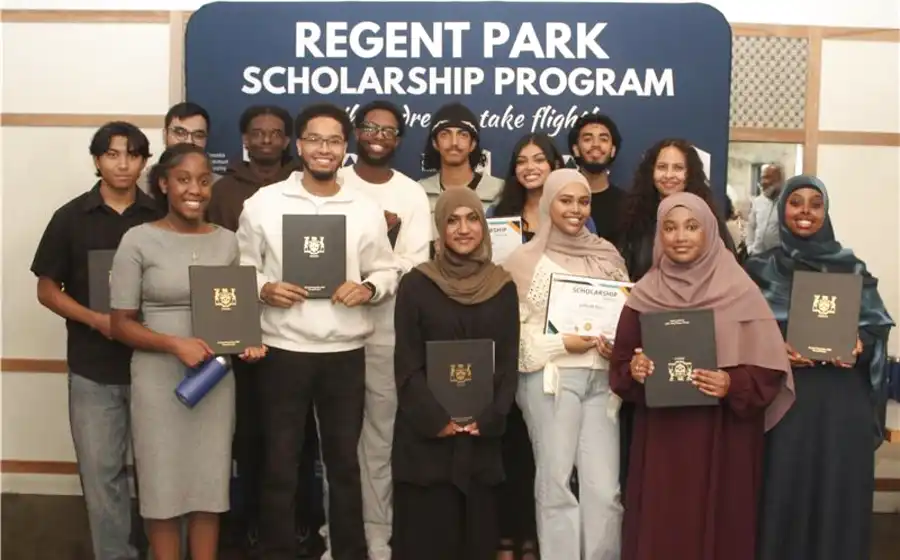
The Michael "Pinball" Clemons Foundation runs three education-focused program streams for youth in Toronto and the Greater Toronto Area: direct scholarship funding, structured community workshops, and sports-based mentorship with an explicit academic component. Each stream addresses a different point of failure in the path from secondary school to post-secondary completion.
| Program stream | Age range | Format | Duration |
|---|---|---|---|
| Scholarship fund | 16–24 | Annual application cycle | One-time or renewable up to 4 years |
| Community education workshops | 14+ (some sessions for parents) | Seminars, half-day workshops | Ongoing, year-round |
| Sports mentorship (academic track) | 14–20 | Group + 1-on-1 sessions | 6–12 months |
Why Education Programs in Toronto Require Supplementary Support
Ontario's public system — OSAP, Canada Student Grants, Canada Learning Bond — is substantial. It is also insufficient for many Toronto youth, for reasons specific to the city's cost structure.
A student from a household earning $45,000 in Jane-Finch who enrolls at Toronto Metropolitan University faces:
- Tuition: $7,200–$10,500/year
- Rent (shared room, North York or Scarborough): $10,800–$13,200/year
- Food: $4,800–$6,000/year
- TTC Metropass: ~$1,440/year
- Books and materials: $1,000–$2,500/year
Total estimated annual cost: $24,000–$38,000. The maximum OSAP package (grant + loan) for 2025–26 is approximately $14,000. The remaining gap — $10,000 to $24,000 — must come from family contributions, part-time work, or supplementary scholarships.
Approximately 1 in 5 youth in Toronto's lower-income neighbourhoods does not complete post-secondary education due to financial constraints (Statistics Canada). MPCF's education programs target this gap directly — not by lobbying for policy change, but by putting money, mentors, and practical information in front of specific young people in specific neighbourhoods.
Scholarship Program — Eligibility, Coverage, and Application
Who Qualifies
Applicants are assessed on three criteria:
- Financial need: Household income relative to Toronto cost-of-living benchmarks. Toronto's median household income is approximately $84,000 (2021 Census); families significantly below this in high-cost neighbourhoods face the sharpest barriers.
- Community engagement: Volunteer work, participation in sports programs, or involvement in school or neighbourhood initiatives. Two years in a community basketball league at Jane-Finch or Malvern qualifies. Elite athletic achievement is not required.
- Academic standing: Minimum GPA requirements vary by award. Some awards prioritize improvement trajectory over absolute grades — recognizing that students managing part-time work and family responsibilities often show stronger growth than their transcripts reflect.
Applicants must be GTA residents planning to enroll in a recognized Canadian post-secondary institution: university, college, or a registered trades program.
What Scholarships Cover
| Expense category | Covered |
|---|---|
| Tuition fees | Yes |
| Textbooks and course materials | Yes (select awards) |
| Living expenses | Partial (need-based awards) |
| Equipment or tools (trades programs) | Yes (trades-specific awards) |
| Transportation | No |
Awards range from $500 to $5,000 per year. Some are renewable for up to four years, provided the recipient maintains academic standing and community involvement.
Application Timeline
The cycle opens in January and closes in March for the following academic year. Decisions are communicated by May or June — in time for recipients to confirm enrollment before institutional deadlines.
Required documents:
1. Proof of Canadian residency and GTA address 2. Most recent tax return or Notice of Assessment (parent/guardian if under 18) 3. Academic transcripts 4. Two reference letters (one from a community or sports organization) 5. Personal statement (500–800 words)
Applications submitted after the March deadline are not considered for that cycle. There is no appeals process for late submissions.
Post-Secondary Institutions MPCF Recipients Commonly Attend
| Institution | Type | Approximate domestic tuition (2025–26) |
|---|---|---|
| University of Toronto | University | $6,100–$15,000+ |
| Toronto Metropolitan University | University | $7,200–$10,500 |
| York University | University | $6,000–$9,200 |
| OCAD University | University | $6,800–$8,400 |
| Humber College | College | $3,800–$5,200 |
| Seneca Polytechnic | College | $3,900–$5,400 |
| George Brown College | College | $3,800–$5,100 |
| Centennial College | College | $3,700–$5,000 |
| Sheridan College | College | $4,000–$5,300 |
Community Education Workshops — Topics, Formats, and Locations
MPCF delivers workshops across Toronto's 31 Neighbourhood Improvement Areas — the communities identified by the City of Toronto as facing the greatest concentration of social and economic challenges. Programs run in community centres, schools, libraries, and faith-based spaces.
Workshop Topics and Formats
| Topic | Format | Audience |
|---|---|---|
| Post-secondary pathways in Canada | 2-hour seminar | Youth 15–18 |
| Understanding OSAP and student loans | 2-hour seminar | Youth 17–22 and parents |
| Canada Learning Bond and RESP basics | 90-minute session | Parents of children under 18 |
| Financial literacy for young adults | 4-session workshop | Youth 18–24 |
| Resume and job application skills | Half-day workshop | Youth 16–24 |
| Navigating mental health resources in Toronto | 90-minute session | Youth and parents |
| Sports and leadership development | 6-week program | Youth 14–18 |
The OSAP navigation workshop is consistently the most attended. Common errors that reduce OSAP awards include: failing to report all eligible expenses, not applying for the bursary component separately, and missing the renewal window for the following year. MPCF facilitators walk participants through the application step by step, not just the overview.
Canada Learning Bond — A Frequently Missed Resource
The Canada Learning Bond deposits $500 into an RESP for children from low-income families, plus $100 per year up to age 15 — with no personal contribution required from the family. Uptake among eligible families in Toronto's NIA communities is significantly below the national average. MPCF's CLB workshop helps families claim funds that are already available to them but go unclaimed because the application process is unfamiliar.
A family with three children under 15 who qualifies for the CLB and has never applied may be entitled to $1,500–$2,000 in accumulated federal deposits. That money is sitting in an unclaimed RESP.
Where Workshops Run
Key neighbourhoods where MPCF programs operate:
- Jane-Finch (Black Creek) — one of Toronto's largest underserved communities, high proportion of recent immigrants and youth
- Rexdale-Kipling — northwest Toronto, significant Somali and Caribbean communities
- Malvern — northeast Scarborough, large South Asian and Caribbean populations
- Flemingdon Park / Thorncliffe Park — east Toronto, high-density immigrant communities
- Lawrence Heights — north Toronto, undergoing redevelopment
- Mount Dennis — west Toronto, historically underinvested
- Regent Park — downtown east, partially redeveloped but still NIA-designated
- Scarborough Village / Woburn / Morningside Heights — southeast Scarborough
Locations are chosen for TTC accessibility without requiring a transfer. Transportation is a real barrier in Scarborough and Etobicoke, where transit coverage is thinner than in the downtown core.
MPCF partners with Toronto Public Library branches — 100 locations across the city — to co-locate programs where youth already go for academic support. Partnerships with TDSB and TCDSB schools allow workshop delivery during school hours or in after-school programs, reaching students who would not independently seek out a community organization.
Sports Mentorship — The Academic Component
The sports mentorship program is not a standalone athletics initiative. It is structured to connect sport participation directly to educational and career outcomes. Mentors commit to a minimum of 6 months of structured engagement.
Sessions cover practical topics:
- How to navigate a college application at TMU, Humber, or Seneca
- Managing a part-time job alongside a full course load without losing academic standing
- Accessing mental health resources in Toronto: ConnexOntario, CAMH youth services, Kids Help Phone
- Reading an OSAP award letter and identifying errors or missing components
- Understanding the difference between grants (non-repayable) and loans in an OSAP package
Why Near-Peer Mentorship Produces Different Outcomes
Research from the Canadian Centre for Ethics in Sport and multiple university studies on youth development shows that mentorship by near-peers — people 5–15 years older with similar backgrounds — produces stronger outcomes than mentorship by authority figures alone.
The mechanisms are specific:
- Credibility: An athlete who grew up in Rexdale and navigated the TDSB school system carries different authority than a guidance counsellor who did not face the same barriers.
- Practical knowledge: Athletes who have managed academic eligibility requirements, part-time work, and financial pressure give specific, actionable advice — not general encouragement.
- Sustained engagement: Relationships built on shared experience last longer than those built on institutional assignment.
Mentor Selection and Training
| Stage | Content |
|---|---|
| Application screening | Background check, community connection assessment |
| Orientation (2 days) | Youth development principles, trauma-informed communication |
| Supervised sessions | First 4 sessions observed by program coordinator |
| Ongoing support | Monthly mentor check-ins, access to program staff |
MPCF does not require mentors to have competed at a high level. A recreational basketball player who grew up in Malvern and has navigated post-secondary education is a strong candidate. Prior experience working with youth is helpful but not required — the 2-day orientation covers the foundational skills.
How MPCF Measures Education Program Outcomes
MPCF tracks outcomes, not attendance. The metrics used:
- Percentage of scholarship recipients who complete their first year of post-secondary
- Percentage of mentorship participants who report increased confidence in academic planning (self-reported, 6-month follow-up survey)
- Percentage of community education participants who successfully apply for OSAP or other financial aid within 12 months of attending a workshop
These require follow-up contact with participants over time — harder to collect than attendance numbers, but the only data that shows whether a program changed anything. Attendance figures tell you how many people showed up. Outcome data tells you whether the program was worth running.
Key Data Points — Toronto Youth Education Context
| Statistic | Value | Source |
|---|---|---|
| Youth (15–29) in Greater Toronto Area | ~700,000 | Statistics Canada, 2021 Census |
| Youth not completing post-secondary due to cost | ~20% in low-income areas | Statistics Canada |
| City of Toronto Neighbourhood Improvement Areas | 31 | City of Toronto |
| OSAP maximum grant (2025–26) | ~$3,500/year | Ontario government |
| Canada Learning Bond (initial deposit) | $500 | ESDC |
| CLB annual top-up (up to age 15) | $100/year | ESDC |
| Average shared room rent, Scarborough | $900–$1,100/month | Market data, 2025 |
| Toronto visible minority population | 51% | Statistics Canada, 2021 Census |
| Languages spoken in Toronto | 200+ | City of Toronto |
| Registered charities in Canada | ~86,000 | CRA, 2023 |
Questions
FAQ
01What education workshops does MPCF offer, and do I need to register in advance?
MPCF runs workshops on post-secondary pathways, OSAP navigation, Canada Learning Bond basics, financial literacy, resume skills, and mental health resources in Toronto. Most sessions are delivered in community centres, schools, and Toronto Public Library branches across the city's 31 Neighbourhood Improvement Areas. Registration requirements vary by location and partner organization — some sessions are open-door, others require advance sign-up through the hosting community centre or school. The OSAP navigation workshop and the Canada Learning Bond session are the two most in demand. Families with children under 18 are particularly encouraged to attend the CLB session, as many eligible families in Toronto's NIA communities have not yet claimed funds they are entitled to.
02Can I attend MPCF education workshops if I am not applying for a scholarship?
Yes. Community education workshops are open to youth and families regardless of scholarship eligibility. There is no application process, income threshold, or prior connection to MPCF required to attend a workshop. Sessions on OSAP navigation, financial literacy, and post-secondary pathways are designed for anyone in the 14–24 age range — and for parents — who wants practical information. The only sessions with specific eligibility criteria are the scholarship program itself and the sports mentorship cohort.
03How does the sports mentorship program connect to education outcomes?
The mentorship program is structured around educational and career planning, not athletic development. Mentors — recruited from Toronto's community sports ecosystem and trained by MPCF — cover topics including college application navigation, OSAP award letter interpretation, managing academic workload alongside part-time employment, and accessing mental health resources. The sports background is the basis for the mentoring relationship, not the content of it. Youth aged 14–20 in GTA community programs are eligible; the program runs for 6–12 months with a combination of group sessions and one-on-one meetings.
04What happens if I miss the scholarship application deadline in March?
Applications submitted after the March deadline are not considered for that academic year's cycle. The next opportunity is the following January, when the new cycle opens. In the interim, MPCF's community education workshops can help identify other scholarship and bursary sources — including institutional bursaries at U of T, TMU, York, Humber, Seneca, George Brown, and Centennial that have separate application timelines. OSAP applications for the following year can be submitted as early as the spring, and MPCF's OSAP navigation workshop covers how to maximize your application before the deadline and avoid the most common errors that reduce award amounts.